


It is a widely accepted axiom that what goes up must come down.
Yet the converse does not seem to be true.
A much harder question to answer is; “Why do only some things that go down, come up again?”.

It is a widely accepted axiom that what goes up must come down.
Yet the converse does not seem to be true.
A much harder question to answer is; “Why do only some things that go down, come up again?”.
It is the nail that sticks up that gets hammered flat.
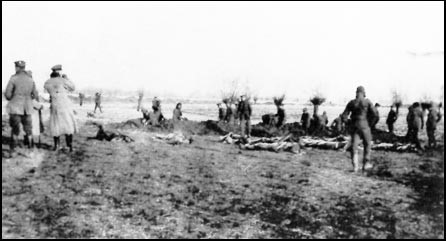
I was recently watching a programme commemorating the hundredth anniversary of the start of the First World War. The programme showed clips of interviews with survivors of the Western Front, both British and German. One particular interview caught my interest, it concerned the 1914 Christmas Truce between the British Expeditionary Force and the German army along part of the Western Front in Belgium.
The now elderly, young British subaltern was still bemused, fifty years after the event, by a conversation that he had had with a young German officer.
While they were burying their dead, he had asked what the German was writing on a simple wooden cross. The German replied that he was writing “For Freedom” and “In the Sight of God”. This was the cause of the young officer’s confusion, for this is what the British believed that they were fighting for as well. Freedom, and God was surely on the side of the British.
So why exactly were they all fighting?
For a few brief hours the soldiers on each side gave up their attachment to the idea of country, army, regiment, and war. Instead they let these ideas fall away, giving up much of what they had held to be true since childhood, and celebrated their common humanity.
“On the parable of the Good Samaritan: “I imagine that the first question the priest and Levite asked was: ‘If I stop to help this man, what will happen to me?’ But by the very nature of his concern, the good Samaritan reversed the question: ‘If I do not stop to help this man, what will happen to him?”
Martin Luther King.
The parable of the Good Samaritan is a teaching from the Christian faith about kindness. More importantly, it is about everyone being a part of the same world, and how, as social creatures, we cannot afford to be indifferent to our fellow human beings. Status, rules, or any other artificial barriers that we place between ourselves and others, are often the excuses that we give to ourselves for not getting involved.
It is their choice, someone else will stop to help, I don’t know what to do, I am going to be late. Similar justifications may come to us as reasons to explain our choice not to become involved.
When the immediate risk of suicide is high, getting involved saves lives.
What is white and fluffy and lives in the jungle?
A meringue utang.
The game of life is hard to play
I’m gonna lose it anyway
The losing card of some delay
So this is all I have to say
Suicide is painless
It brings on many changes
I can take it or leave it if I please
And you can do the same thing if you please.The theme from MASH
As a teenager I loved the programme MASH.
The adventures of the staff of a mobile army surgical hospital in the Korean War.
I particularly liked the theme tune and used to hum and sing it to myself.
One day my mother heard me singing the words of the chorus, and became angry with me. It wasn’t for several years afterwards that I fully understood why.

Some people cannot sleep because they have insomnia. Me? I cannot sleep because I have an Internet connection.
Sleep is a sadly neglected part of human life. If we are short of time, if we have too much to do, or are under pressure at work, or with our homework, we tend to scrimp on our sleep. Working an all nighter is a badge of honour in some companies. This sounds like a good idea, freeing up more time for us to deal with the stressful goings on in our lives. However we may just be storing up more trouble for ourselves than we avoid.
Many of the old wives tales and nursery rhymes contain a large element of truth.
Early to bed, early to rise, makes a boy healthy, wealthy and wise.
You need your beauty sleep.
Missing a night of sleep has the same effects on our brains as having a blood alcohol level that is above the legal driving limit.
“To study the Buddha Way is to study the self. To study the self is to forget the self. To forget the self is to be actualized by myriad things. When actualized by myriad things, your body and mind as well as the bodies and minds of others drop away. No trace of enlightenment remains, and this no-trace continues endlessly.”
Dogen Zenji 1200-1253
When I was young my grandmother took me to see a Chinese circus perform in Edinburgh. One of my favourite acts was the mysterious girl in the red cheongsam, emblazoned with dragons, who span plates on long bamboo poles. I became quite worried as the plates slowed down and looked as though they were about to topple to the ground and smash at any moment.
Only this never happened.
What is yellow and swings from cake to cake?
Tarzipan.

The unexamined life is not worth living.
Socrates
Mindfulness has gone mainstream. No longer the preserve of ancient and inscrutable oriental monks or bearded hippie weirdos, it is now being taught in schools. Several leading US companies are providing training to their workers and it is touted as the cure for many of the ills that affect modern man. Even the United States military are training their soldiers in mindfulness techniques.
Adapted from Buddhist teaching and increasingly applied to psychology and then to the mundane world, mindfulness is advertised as helping all psychological disorders from depression, where it is described as being as effective as antidepressant medication, through eating disorders and drug addiction to ADHD. Although it is less helpful for physical disorders, if you believe the newspapers and the internet, it is said to help with heart disease, cancer, lowering blood pressure, chronic pain, sleep and a myriad of other conditions. It leads to a longer life, better health and a much greater sense of wellbeing. Mindfulness boosts the immune system, leads to sporting prowess and better parenting, reduces anger and sets free creativity. The scientific evidence suggests that it is a key element in happiness.
Has mindfulness become a twenty first century panacea?
Why has a milking stool only got three legs?
Because the cow has the udder one.
 Vajra Blue
You must be logged in to post a comment.